Partitions changed
0

Confidential. This demonstration contains SuperTruth trade secrets.
By entering the PIN you agree to keep everything on this site confidential: no copying, photographing, recording, or describing it to anyone outside SuperTruth Inc., its counsel, and invited partners. Your access may be logged. If you do not agree, close this page.
© 2026 SuperTruth Inc. All rights reserved.
/ Attested Baseline
An AI agent is about to touch a database. Before it can act, the data's trust state is scored, fingerprinted, signed, and anchored to a ledger the agent cannot reach. Whatever the agent does next, the record testifies: what the data was, what it became, which agent changed it, and when. This page runs the actual method, live, and ends in the certificate a court, insurer, or regulator would consume.
Part of a two-site proof. This one proves the record itself. Its companion, revocation.supertruth.ai, proves what the record makes possible: pulling data back out of every AI system that touched it. Run both.
An AI acts on data and something goes wrong. Today the argument over what happened is fought with each side's own logs, which each side controls. This produces the opposite: a neutral, tamper-evident record of what the data was, what it became, which agent changed it, and when, in a format built to be admissible without a human custodian.
That record is what three markets now need. Insurers: AI liability coverage is forming, and underwriters cannot price or adjudicate agent-caused loss without a verifiable pre-incident baseline. This is that baseline. Litigants and regulated enterprises: when an agent touches evidence, case files, financial records, or clinical data, they need tamper-evident proof of the before-and-after, and chain of custody extended into the agent era. Regulators: a certificate that verifies itself, without trusting the company that produced it.
This is the substrate. The capability it unlocks, pulling data back out of every model that touched it, is proven on the companion site, revocation.supertruth.ai. Together they are one system: this proves the record can be trusted, that one proves you can act on it.
Every partition scored on the eight trust dimensions, each in [0,1]. The baseline pass fills the matrix in ink. The differential pass re-scores the same partitions; any value that moved is rewritten in red with the sworn baseline value struck through above it. T is the weight-aggregated trust score per partition.
The five components bound into one SHA-384 commitment before the agent acts. Only digests and scores appear here; the rows never leave the database (zero-copy, §1).
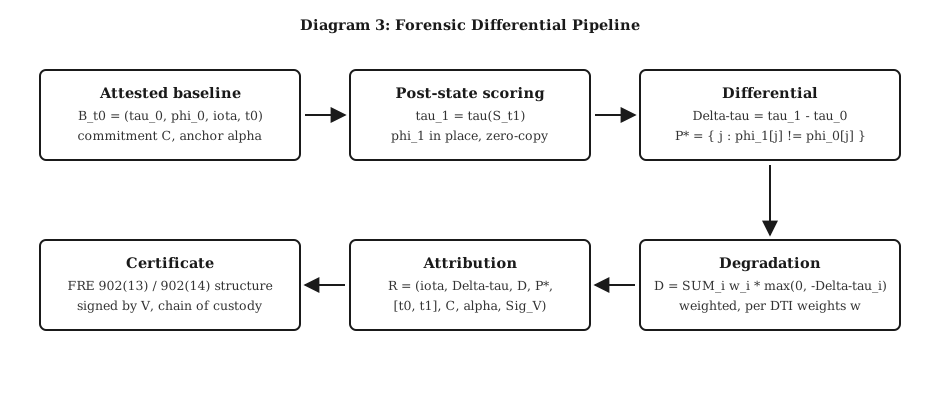
D = Σ wᵢ · max(0, −Δτᵢ), expanded with the run's real numbers. Your browser recomputes D from the streamed values and checks it against the certificate.
Each ledger entry hashes its payload together with the previous entry's hash, so the record cannot be rewritten, only extended. Your browser recomputes the whole chain with WebCrypto SHA-384 and confirms the head.
| Position | Kind | Entry hash | Previous hash |
|---|
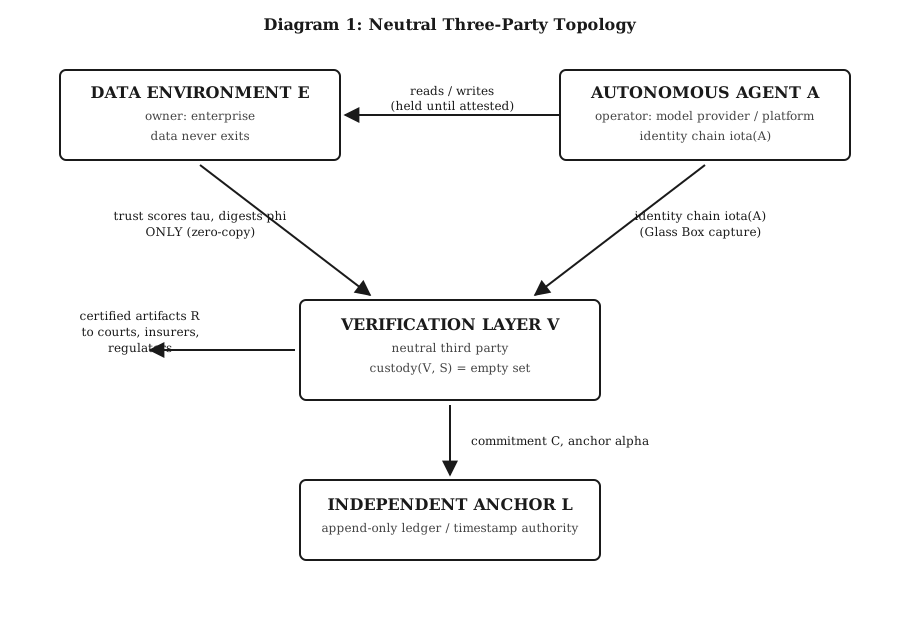
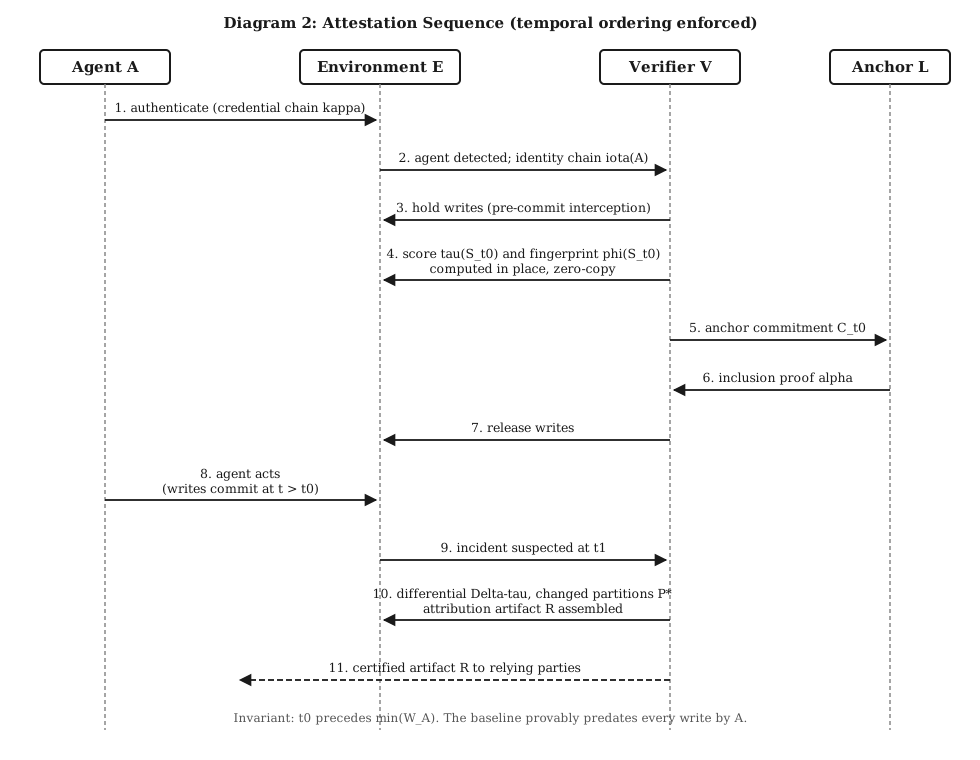
Everything on this page reduces the application to practice. The map from page to filing, and below it, three of the appendix figures, unmodified.
| On this page | In the filing |
|---|---|
| Agent detected in the run log | Algorithm 1 · DETECT_AGENT, Glass Box capture of ι |
| Trust matrix τ, aggregate T | Appendix §1 · Defs. trust characterization, aggregate trust score |
| Commitment C, hold-then-release ordering | Algorithm 2 · ATTEST_BASELINE · Thm. 1 enforced precedence |
| Δτ, degradation D, changed set P* | Algorithm 3 · FORENSIC_DIFFERENTIAL · Defs. trust differential, partition localization |
| Certificate exhibit and download | Algorithm 4 · EMIT_CERTIFICATE · Disclosure §3.5, FRE 902(13)/(14) |
| Anchored ledger, browser-recomputed chain | Appendix §3.6 · Def. anchor interface · Thm. anchor reduction |
| The twelve data environments | Disclosure §8 embodiments · §3.10 quantum · §3.6 disconnected anchoring |
| Salted digests φ, scores-only artifacts | Appendix §1 · Def. structural fingerprint (zero-copy) |